
Farali Food on Mahashivratri: A Mindful Vrat, Made Easy with Chatkazz
As Mahashivratri approaches, the atmosphere changes in a quiet but noticeable way. Temples prepare for an all-night vigil, homes slow down, and many people make a conscious effort to vrat (fast).
But fasting on Mahashivratri is not about staying hungry. It is about how you choose to nourish yourself. On that note, Farali food becomes an important part of such experiences.
Instead of heavy meals and routine eating, Farali food invites simplicity. With lighter choices, energy flows easier, thoughts settle quieter, presence grows stronger after sunset.
The Quiet Meaning Behind Mahashivratri
Mahashivratri is observed once a year, usually sometime between February and March. It is known as The Great Night of Shiva, and unlike most celebrations, it invites people inward.
Some go to temples. Some chant mantras. Some meditate. Some simply stay awake in silence. The idea is not to perform, but to pause. Many believe this night supports clarity, discipline, and self-reflection.
That’s why fasting has always been linked to Mahashivratri. Not as a rule but as a support.
Why Fasting on Mahashivratri Feels Intentional
On most days, food is automatic. You eat because it’s time. You eat because you’re busy. You eat without thinking much about it.
Mahashivratri breaks that pattern.
Fasting or even eating lightly reduces distractions. When the body isn’t busy digesting heavy meals, the mind stays clearer. Energy doesn’t dip as often. Long hours of prayer or wakefulness become easier.
But complete fasting isn’t possible for everyone. That’s where Farali food naturally fits in.
What Farali Food Really Represents
Farali food is often misunderstood as “restricted food.” In reality, it’s thoughtfully chosen food.
The word comes from Phalahar, which originally meant fruit-based fasting meals. Over time, Farali came to include certain ingredients that are considered suitable during vrat, easy to digest, uncomplicated, and sattvic in nature.
Here’s the simple distinction people often miss:
Vrat is the intention to fast
Farali food is the support system
Farali food exists so the fast feels sustainable, not exhausting.
What Goes Into Farali Food
There’s a reason certain foods are allowed during Mahashivratri while others are avoided. The idea isn’t punishment. It’s balance.Foods Commonly Considered Farali are:
Fruits and simple fruit bowls
Milk, yogurt, and buttermilk
Sabudana (tapioca pearls)
Potatoes
Peanuts and dry fruits
Rajgira (amaranth flour)
Singhara (water chestnut flour)
Foods Usually Avoided
Grains and lentils
Onion and garlic
Regular table salt (rock salt is used instead)
These choices keep meals light. There’s no heaviness, no over-stimulation of taste. That simplicity aligns naturally with the mood of Mahashivratri.
What People Actually Eat During Mahashivratri
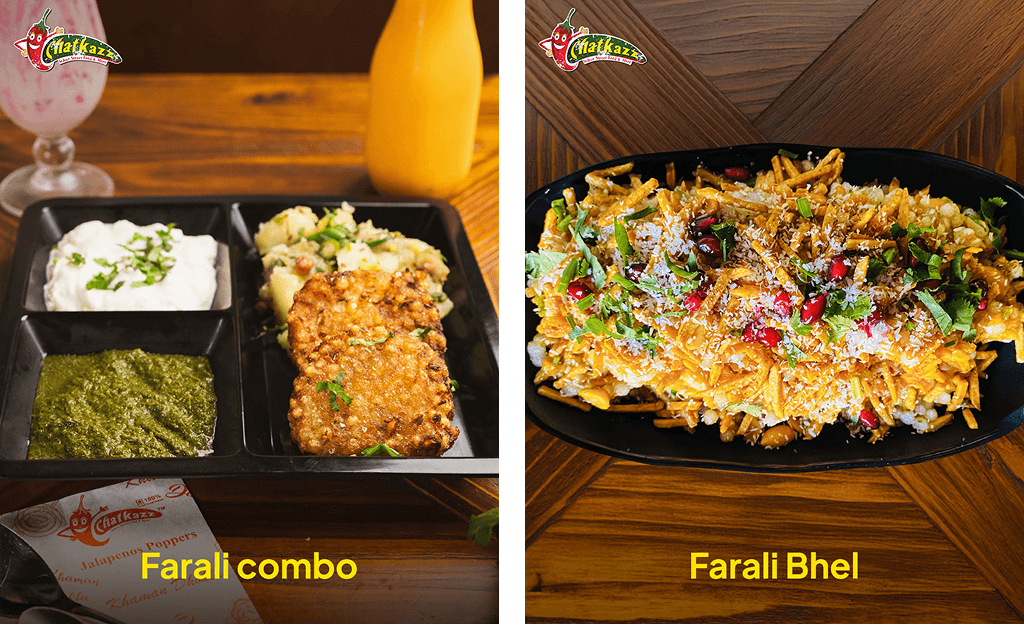
The Farali food options maintain their taste because of their special dietary limitations. The majority of people experience better mental well-being through this practice which brings them stability and peace.
Sabudana Vada is a common choice, especially because it feels familiar. Jeera Aloo is another staple which is simple, warm, and filling without being heavy. Farali Thepla, made from rajgira or singhara flour, gives a sense of normalcy during fasting days. Yogurt or Shrikhand is often added to cool the system, especially if the day is long.
With Chatkazz Tradition Meets Today’s Lifestyle
Not everyone fasting during Mahashivratri has the luxury of time. Work schedules, travel, family responsibilities- all of it continues, even on sacred days.
Yet many still want to maintain the fast sincerely, without mixing ingredients or worrying about rules. This is where Chatkazz steps in.
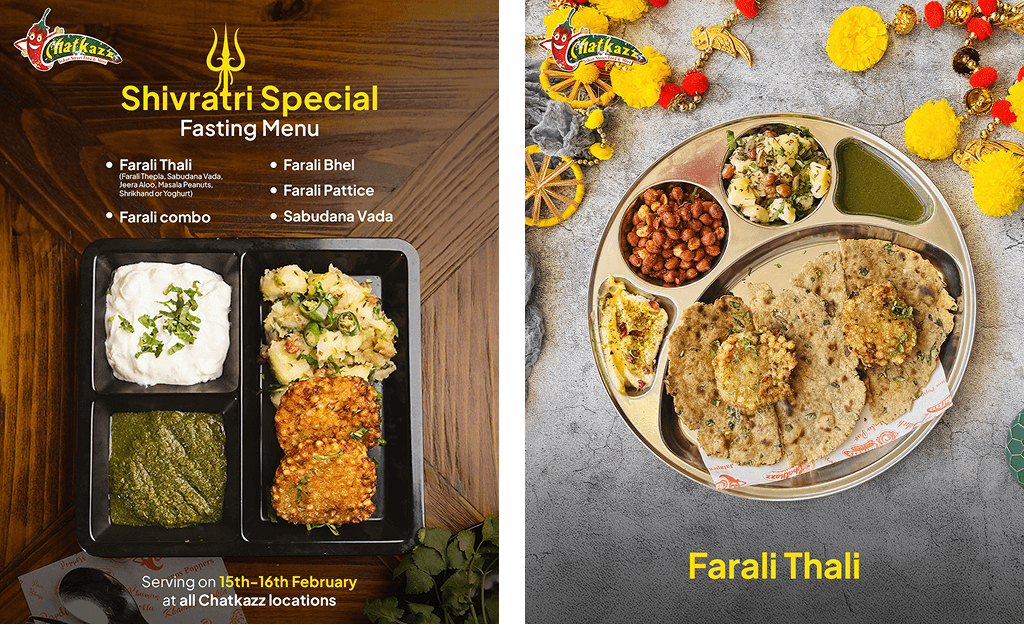
For Mahashivratri on 15th and 16th February, Chatkazz is offering a dedicated Farali food menu across all outlets. The focus is not on innovation, but on doing traditional fasting food correctly.
Farali Options Available at Chatkazz
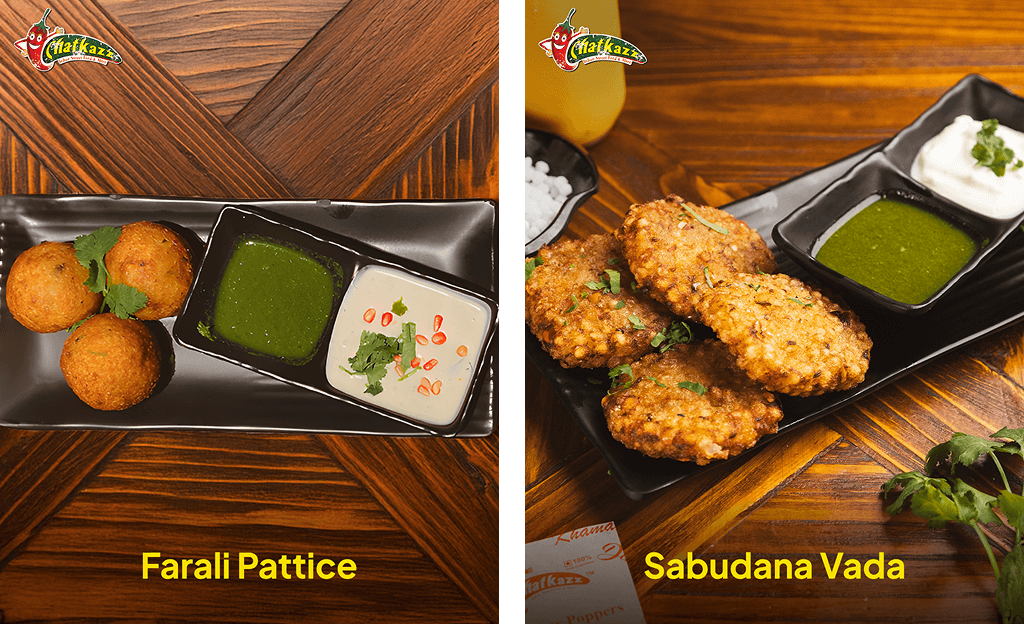
Farali Thali
(Farali Thepla, Sabudana Vada, Jeera Aloo, Masala Peanuts, Shrikhand or Yogurt)
Farali Pattice
Farali Bhel
Farali Combo
For many people, this removes the stress from fasting and lets them focus on the night itself.
A Thought to End With
Mahashivratri isn’t about doing things perfectly. It’s about being present.
Whether you fast fully or choose Farali food, the intention is the same: to simplify, to slow down, to listen inward. Eating less becomes a way of noticing more.
In a world that constantly asks for attention, Mahashivratri quietly asks for stillness.
And sometimes, that stillness begins with what’s on your plate.
FAQs
-
Farali refers to special food items, dishes or ingredients consumed during Hindu fasting.
-
Farali can be taken during all kinds of religious fasting.
-
Farali contains gluten-free ingredients which provide high nutritional value to maintain your energy levels and fullness throughout your fasting period.
-
No. It’s a personal practice, not a rule.
-
During Mahashivratri, staying awake benefits you from a natural, cosmic, and energetic surge.